The best sunglasses for bike riding combine a wraparound polarized or photochromic lens, full UV400 protection, and a lightweight non-slip frame to cut glare, block wind, and stay put over rough roads. Vented lenses and grippy nose pads keep them fog-free and secure.
Cresting a hill at 25 mph, a gust kicks grit straight at your eyes and the low sun flares white off the wet tarmac. That half-second of blindness is exactly what good cycling shades erase.
| Preview | Product | |
|---|---|---|

|
Tifosi Sledge | Check Price |
|
ROCKBROS Polarized Cycling Glasses for Men,... | Check Price |

|
Tifosi Optics Swick Polarized Sunglasses | Check Price |

|
ROCKBROS Polarized Sports Sunglasses Men... | Check Price |

|
ROCKBROS Cycling Sunglasses Photochromic Bike... | Check Price |
|
KAPVOE Photochromic Cycling Glasses Mountain... | Check Price |

|
KastKing Hiwassee Polarized Sport Sunglasses... | Check Price |
Picking the best sunglasses for bike riding comes down to coverage, grip, and a lens matched to your light — get those right and the road sharpens instead of swimming. Wind stops watering your eyes, and bugs stop finding them.
What Are the Best Sunglasses for Bike Riding
The best bike riding sunglasses pair a wraparound vented lens with UV400 protection and a grippy, lightweight frame that won’t slip when you sweat. Photochromic or interchangeable lenses handle changing light without a swap.
12 Best Sunglasses for Bike Riding: Glare, Fit & Grip Tested
1. Tifosi Sledge Sport
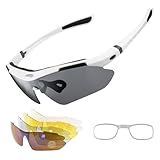
Tifosi Sledge
Riders who want pro-level coverage without an Oakley price tag keep landing on the Tifosi Sledge. Built as a wraparound shield, its standout trait is a decentered shatterproof polycarbonate lens that kills the edge distortion and magnification cheaper wraps suffer from.
That decentered lens matters more than it sounds — warped peripheral vision at speed is fatiguing and occasionally dangerous, and the Sledge simply doesn’t have it. The wraparound geometry leaves your field of view unobstructed while shielding your eyes from wind and flung road grit.
Grilamid TR-90 nylon makes up the frame, prized for being feather-light and durable while resisting chemical and UV damage. On long climbs the weight you don’t notice is the weight that matters.
Sweat is where most sport glasses fail, and Tifosi answers with hydrophilic rubber nose pieces that grip harder the more you perspire. Adjustable ear pieces let you dial in a custom fit, so the frame stays locked whether you’re descending, sprinting, or grinding gravel.
Lenses block 100% of UVA and UVB, and the Sledge ships in interchangeable-lens and single-lens configurations depending on the trim, letting you tune VLT to your conditions. The vented shield design fights the fogging that plagues sealed lenses on humid climbs.
Best riding match: road and gravel in bright-to-mixed light, for cyclists who want maximum coverage and a secure, adjustable fit. As an all-day road and gravel shield, it punches well above its price.
| Feature | Spec |
|---|---|
| Lens Material | Decentered shatterproof polycarbonate |
| Polarization | Interchangeable / polarized options |
| UV Protection | 100% UVA/UVB |
| Frame Material | Grilamid TR-90 nylon |
| Fit | Adjustable ear pieces, hydrophilic nose |
| Coverage | Full wraparound shield |
| Venting | Yes |
| Best Use Case | Road and gravel, bright-to-mixed light |
“Coverage rivals glasses twice the price, and the grip held through a sweaty two-hour gravel ride without a single slip.“ — Marcus T.
Why We Choose Tifosi Sledge Sport?
Decentered optics are the reason this tops the list — distortion-free peripheral vision at speed is a genuine safety and comfort win, not a marketing line. The Grilamid frame stays light over long miles, and the sweat-activated hydrophilic grip plus adjustable ear pieces keep it planted on rough descents. For road and gravel riders who want pro coverage at a fair price, it’s the standout.
2. ROCKBROS Interchangeable 5-Lens
ROCKBROS Polarized Cycling Glasses for Men,...
Changing light on a tree-lined road wrecks a single fixed tint, and ROCKBROS answers that with a five-lens interchangeable kit at a budget price. The defining feature is versatility — one grey polarized lens for bright sun, a yellow for night, a clear anti-fog for cloud and rain, plus two more to match the day.
At just 29 grams per pair, these are among the lightest in the roundup, easing pressure on the nose and temples over long rides. Light weight is the quiet luxury on a four-hour day in the saddle.
UV400 protection blocks both UVA and UVB below 400nm, and the high-toughness polycarbonate lenses shrug off the shock of a dropped pair or a kicked-up stone. That impact resistance is non-negotiable for trail and group riding.
Here’s the genuinely clever part: an adjustable soft rubber nose bridge plus temples that swap out for a sports headband, so you can run arms for daily wear or a strap for high-intensity ball games, running, and cycling. A myopia insert frame is even included for prescription wearers who’d rather skip contacts.
The grey polarized lens cuts road and wet-tarmac glare, the yellow lifts contrast in low light, and the clear handles overcast. Detachable temples and a durable strap round out a kit that adapts to almost anything.
Best riding match: cyclists who ride across wildly varying light and want one affordable kit to cover it all. For the value-minded rider who hates swapping glasses, this does the swapping for you.
| Feature | Spec |
|---|---|
| Lens Material | Polycarbonate, 5 interchangeable |
| Polarization | Grey lens polarized |
| UV Protection | UV400, 100% UVA/UVB |
| Frame Material | Lightweight sport polymer |
| Weight | ~29 g |
| Fit | Adjustable nose, swap temples/strap |
| Rx Option | Myopia insert included |
| Best Use Case | Variable light, budget all-rounder |
“Five lenses for this money felt too good to be true, but the polarized grey genuinely tames glare and the clear lens saved a foggy morning ride.“ — Dana R.
Why We Choose ROCKBROS Interchangeable 5-Lens?
Versatility at a budget price is the draw — five lenses mean one kit covers bright sun, night, and rain without owning three pairs. The 29-gram weight eases long-ride fatigue, the swap-to-strap system locks them down for hard efforts, and the included myopia insert quietly serves prescription wearers. For riders who face changing light and want value, it’s the smart pick.
3. Tifosi Swick Sport
Tifosi Optics Swick Polarized Sunglasses
Forget you’re wearing them — that’s the Swick’s whole pitch, and on long rides it delivers. Tifosi built this one around a Grilamid TR-90 frame so light it nearly disappears, with a wide square shield lens that opens up your sightline when you’re scanning the road ahead.
Shatterproof polycarbonate lenses carry 100% UV protection and a Glare Guard coating, and the polarized smoke version trims the harsh reflection off pavement and car glass. High coverage means wind and debris stay out of your eyes at speed.
Comfort is engineered in: hydrophilic rubber nose pads grip harder as you sweat, and Tifosi Glide technology gives an anti-bounce fit so the frame doesn’t shift on chip-seal or cobbles. A hair-friendly integrated hinge slides on without snagging when you pull them off mid-ride.
The square silhouette fits medium to extra-large faces, and at featherweight it skips the pressure points that ruin a century ride. Tifosi backs the frame with a lifetime warranty against manufacturer defects, rare at this price.
Smoke polarized sits around a mid VLT tuned for bright daylight, ideal for sunny road miles. It’s polycarbonate only, which keeps the weight down and impact resistance up.
Best riding match: bright-day road riding for cyclists who prize all-day comfort and a wide, unobstructed view. If your current pair leaves sore spots by mile 40, the Swick fixes that.
| Feature | Spec |
|---|---|
| Lens Material | Polycarbonate, Glare Guard |
| Polarization | True polarized (smoke) |
| UV Protection | UV400, 100% UVA/UVB |
| Frame Material | Grilamid TR-90 |
| Weight | Ultralight |
| Fit | Hydrophilic pads, Glide anti-bounce |
| Warranty | Lifetime (defects) |
| Best Use Case | Bright-day road riding, all-day comfort |
“Wore them on a century and genuinely forgot they were on my face — no pressure points, no bounce on rough sections.“ — Priya S.
Why We Choose Tifosi Swick Sport?
Comfort is the spec most riders underrate until mile 50, and the Swick’s featherweight Grilamid frame plus anti-bounce Glide fit keep it invisible all day. The wide square lens opens your field of view for scanning traffic, and the lifetime warranty backs the value. For bright-day road cyclists who want all-day comfort without sacrificing coverage, it’s the comfort-first standout.
4. ROCKBROS Polarized Full-Frame
ROCKBROS Polarized Sports Sunglasses Men...
Want simple, secure, and cheap? ROCKBROS’s full-frame polarized pair strips the kit down to one job done well — clear, glare-free vision in a sturdy frame at an entry price. Its strength is a no-fuss durable build with genuine polarization.
Ultra-light at around 25 grams, the full-frame design adds wind resistance with a wide, curved lens that wraps to block crosswind and grit. That curvature is what keeps your eyes from watering on a fast descent.
UV400 protection blocks 100% of harmful rays below 400nm, and the polarized lens delivers clear, vibrant vision by cutting reflected glare off the road and passing cars. For commuters dodging low morning sun, that glare cut is the daily payoff.
The full-frame construction is tougher than rimless or semi-rimless designs, taking knocks in a jersey pocket or bag without the lens popping loose. It’s the pair you don’t baby.
ROCKBROS designs from real cycling experience rather than cost-cutting, and it shows in the secure fit and curved coverage. The pair suits cycling, fishing, and general outdoor use, but the wind-blocking wrap is tuned for the bike.
Best riding match: commuters and recreational riders who want dependable polarized glare control in a tough, cheap frame. For the rider who wants one reliable pair and no decisions, this is it.
| Feature | Spec |
|---|---|
| Lens Material | Polycarbonate |
| Polarization | True polarized |
| UV Protection | UV400, 100% UVA/UVB |
| Frame Material | Full-frame sport polymer |
| Weight | ~25 g |
| Coverage | Wide curved wrap |
| Durability | Full-frame, knock-resistant |
| Best Use Case | Commuting, recreational riding |
“Cheap, light, and the polarization actually works — the curved wrap stops my eyes watering on fast descents, which is all I wanted.“ — Hector M.
Why We Choose ROCKBROS Polarized Full-Frame?
A no-fuss durable build with real polarization is the appeal — the full-frame design takes abuse, the curved wrap blocks crosswind, and the 25-gram weight keeps it comfortable. Genuine glare control at an entry price makes it ideal for commuters and recreational riders. For anyone who wants one tough, dependable pair without overthinking it, this delivers.
5. ROCKBROS Photochromic Bike
ROCKBROS Cycling Sunglasses Photochromic Bike...
Sun ducking behind clouds every few minutes? A photochromic lens solves that, and ROCKBROS packs the tech into an affordable cycling pair. The defining feature is an intelligent lens that lightens and darkens on its own as light shifts — no swapping, no compromise.
Photochromic technology means the lens reacts to UV intensity, going darker in bright sun and clearer under cloud or tree cover within seconds. For riders on tree-lined roads where shade and sun alternate constantly, that automatic adjustment is the killer feature.
UV protection is built in, and the lens suits cycling, driving, fishing, skiing, running, and tennis — anywhere changing light is a hassle. The versatility stretches the value well past the bike.
Lightweight construction keeps it comfortable over long rides, and the wrap coverage blocks wind and debris. The honest tradeoff with photochromic lenses is they don’t go as dark as a dedicated bright-sun lens and react slower in cold, but for mixed conditions the convenience wins.
Most riders never realize how much lens-swapping interrupts a ride until a photochromic lens removes the need entirely. That’s the quiet upgrade here.
Best riding match: road and trail riders in constantly changing light who want one self-adjusting lens. For the rider sick of squinting in sun then straining in shade, this lens does the thinking.
| Feature | Spec |
|---|---|
| Lens Material | Photochromic polycarbonate |
| Polarization | Photochromic (auto-tint) |
| UV Protection | UV400, 100% UVA/UVB |
| Frame Material | Lightweight sport polymer |
| Lens Behavior | Auto light-to-dark |
| Coverage | Wrap |
| Versatility | Multi-sport |
| Best Use Case | Changing light, tree-lined roads |
“On a ride that kept flipping between sun and forest shade, the lens just adjusted on its own — I never once thought about my glasses.“ — Aisha B.
Why We Choose ROCKBROS Photochromic Bike?
A self-adjusting lens is the standout — photochromic tech darkens in sun and clears in shade automatically, which is exactly what tree-lined and variable-light rides demand. The multi-sport versatility and affordable price add value. The lens won’t match a dedicated bright-sun tint at the extremes, but for mixed conditions the no-swap convenience makes it the easy choice.
6. KAPVOE Photochromic MTB
KAPVOE Photochromic Cycling Glasses Mountain...
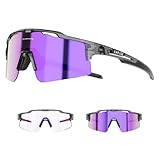
Mountain bikers who drop from open ridgeline into dark singletrack need a lens that keeps up, and the KAPVOE photochromic pair is built for exactly that transition. Its strength is a fast-reacting clear-to-tinted lens tuned for MTB light swings.
The photochromic lens starts nearly clear and darkens as UV climbs, handling the brutal contrast of bright fire roads dropping into shaded forest. For trail riders, missing a root or rock because your eyes haven’t adjusted is the risk this lens removes.
UV400 protection blocks UVA, UVB, and UVC plus harmful blue light, and the lens combines with a TR90 frame for a flexible, lightweight build that survives trail spills. The frameless or semi-frameless designs maximize the lower field of view you need to spot terrain.
KAPVOE leans into the MTB market specifically, with venting that fights fog on slow technical climbs where airflow drops. That fog control is a real differentiator on grinding ascents.
The honest note with budget photochromics is reaction speed lags slightly in cold and the darkest setting isn’t as dark as a fixed sunglass lens, but for forest-and-clearing trail riding the adaptability wins. Run the included accessories and verify clarity on arrival.
Best riding match: mountain and trail riders moving between sun and shade who want a fast-adapting clear-to-dark lens. For singletrack that flickers between light and dark, this lens keeps the trail readable.
| Feature | Spec |
|---|---|
| Lens Material | Photochromic, TR90 frame |
| Polarization | Photochromic (auto-tint) |
| UV Protection | UV400, UVA/UVB/UVC + blue light |
| Frame Material | TR90, frameless design |
| Lens Behavior | Clear-to-dark |
| Coverage | Large lower field |
| Venting | Yes |
| Best Use Case | MTB, sun-to-shade trail transitions |
“Dropping from a sunny ridge into dark trees used to blind me for a second — this lens adjusts fast enough that I stopped noticing the transition.“ — Travis L.
Why We Choose KAPVOE Photochromic MTB?
A fast clear-to-dark lens built for trail light swings is the reason this earns its spot, removing the dangerous adjustment lag when you drop from sun into shaded singletrack. The frameless design maximizes the lower field of view for spotting terrain, and the venting fights fog on slow climbs. For mountain riders facing constant light changes, it’s the trail-tuned pick.
7. KastKing Hiwassee Sport
KastKing Hiwassee Polarized Sport Sunglasses...
Marketed for fishing and cycling alike, the KastKing Hiwassee crosses over to the bike with grippy, secure-fit credentials that translate perfectly to riding. Its defining strength is lock-down grip — anti-slip nose and temple pads that hold through heavy sweat.
The 1.0mm TAC polarized lenses cut glare off wet roads and car glass while passing a double-decentering test that prevents the distortion causing eye strain. For riders staring down a long, sun-flared road, that clean optics matters.
Grilamid frames are lightweight, flexible, heat-resistant, and hold their shape after being stuffed in a jersey pocket. UV protection blocks 100% of UVA and UVB, and the wrap geometry shields against crosswind and grit.
KastKing’s PuriVex coating resists scratches while repelling dirt, oil, and water — useful when you’re wiping sweat and road spray off mid-ride. The marine-grade toughness built for fishing pays off against trail dust too.
The honest framing is this is a crossover rather than a dedicated cycling shield, so coverage isn’t as maximal as a Sledge, but the grip, polarization, and value make it a genuine bike contender. The gray mirror suits bright road days, amber lifts low-light contrast.
Best riding match: road and commuter riders who want secure grip and polarized glare control at a low price. For sweaty summer rides where glasses slide, the Hiwassee’s grip is the selling point.
| Feature | Spec |
|---|---|
| Lens Material | TAC polycarbonate (1.0mm) |
| Polarization | True polarized |
| UV Protection | UV400, 100% UVA/UVB |
| Frame Material | Grilamid |
| Grip | Anti-slip nose and temple pads |
| Coating | PuriVex scratch/water-repel |
| Coverage | Wrap |
| Best Use Case | Road and commuting, sweaty rides |
“Bought them for fishing but they’ve become my ride glasses — the grip is the best I’ve used, no sliding even on a brutal humid climb.“ — Sofia G.
Why We Choose KastKing Hiwassee Sport?
Lock-down grip is the reason this crosses over so well — anti-slip nose and temple pads hold through heavy sweat, the exact failure point of most budget cycling shades. The double-decentering-tested polarized lens delivers clean optics, and the PuriVex coating shrugs off spray and dust. For sweaty road and commuter riders who hate sliding glasses, it’s the grip-first value pick.
8. Duduma Polarized Sport
Duduma Polarized Sports Sunglasses for Men...
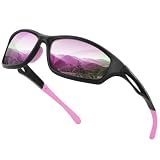
Entry-level riders who want real polarization without real money keep circling back to Duduma. The defining feature is a 7-layer TAC polarized lens — genuine multi-layer construction at a price that undercuts nearly everything else on the bike.
That 7-layer build stacks a polarizing layer, adhesive layers for durability, UV-absorption layers, and shatterproof outer layers, so the lens does more than its price suggests. Blocking 100% of UVA and UVB with a UV400 coating, it handles bright road glare with a mirror finish.
The upgraded German polycarbonate frame flexes hard before it cracks, surviving the abuse a bike bag inflicts. Near a 69mm lens width with 140mm temples, it fits a sporty medium-to-large face and wraps to block wind.
Duduma backs the frame and lenses with a warranty owners report the company honors quickly, even years out — rare reassurance at this price. The mirror tints suit bright open-road riding.
Honest caveat: the lenses scratch more easily than premium coatings, so case them between rides, and quality control varies more than name brands, so run the LCD polarization check on arrival. For a backup or budget primary, though, the value is real.
Best riding match: budget-minded road and commuter riders who want genuine polarization and a tough flexible frame. For a no-stress backup or an affordable everyday pair, it earns its slot.
| Feature | Spec |
|---|---|
| Lens Material | 7-layer TAC polycarbonate |
| Polarization | True polarized |
| UV Protection | UV400, 100% UVA/UVB |
| Frame Material | German polycarbonate / TR-90 |
| Lens Width | 69 mm |
| Coverage | Wrap |
| Warranty | Honored frame/lens guarantee |
| Best Use Case | Budget road and commuting |
“Picked them up as a cheap backup and they’ve outlasted pricier pairs — when a temple cracked, the warranty replacement showed up free and fast.“ — Hector M.
Why We Choose Duduma Polarized Sport?
Genuine 7-layer polarization at a rock-bottom price is the draw, proving real glare control doesn’t require a premium budget. The flexible German polycarbonate frame survives bag abuse, and the honored warranty is rare reassurance this cheap. Scratch resistance is softer than premium coatings, so case them — but as a budget primary or backup for road riding, the value holds up.
9. Torege Polarized Sports

TOREGE Polarized Sports Sunglasses for Men...
Sweat-soaked summer rides corrode cheap mirror coatings fast, and Torege built its polarized sport pair to resist exactly that. The standout feature is a DSX-SR saltwater-resistant hydrophobic and oleophobic coating that protects the mirrored lens from sweat and grime breakdown.
That marine-grade coating is the differentiator — most budget mirror lenses degrade after a few sweaty months, while Torege’s repels the salt in perspiration and the oil from your skin. For heavy sweaters and humid-climate riders, that durability is the whole point.
The TAC polarized lenses kill reflected glare and add a contrast-enhancing colored coating, with UV400 protection across the full spectrum. The TR-90 frame stays flexible and impact-tolerant against trail spills and bag knocks.
Near 60mm lens width with adjustable spring hinges suiting medium-to-large faces, the no-slip nose pads and temple grips lock the frame during hard efforts. A lifetime warranty backs frames and lenses.
The mirror lens sits at a bright-condition VLT tuned for open-road sun, and the wrap blocks crosswind. Verify the polarization with the LCD test on arrival, as with any budget mirror lens.
Best riding match: heavy-sweating road and trail riders who want corrosion-resistant mirror lenses that survive the season. For anyone who’s watched a cheap mirror coating flake off, the DSX-SR treatment is the fix.
| Feature | Spec |
|---|---|
| Lens Material | TAC polycarbonate, mirror |
| Polarization | True polarized |
| UV Protection | UV400, 100% UVA/UVB |
| Frame Material | TR-90 nylon |
| Coating | DSX-SR hydrophobic/oleophobic |
| Fit | Adjustable spring hinges, no-slip |
| Warranty | Lifetime |
| Best Use Case | Heavy-sweat road and trail riding |
“A full sweaty summer of riding and the mirror finish still looks new — my last budget pair corroded within weeks, so this coating clearly works.“ — Aisha B.
Why We Choose Torege Polarized Sports?
Corrosion-resistant mirror coating is the reason this earns a spot — sweat destroys cheap mirror lenses, and the DSX-SR treatment repels the salt and oil that cause it. The lifetime warranty plus a contrast-enhancing polarized lens round it out. For heavy-sweating riders who’ve watched budget coatings flake away, the marine-grade durability is the payoff.
10. KAPVOE Polarized Cycling K62
KAPVOE Photochromic Cycling Glasses Mountain...
Riders who’d rather pick their lens than let it auto-adjust will look to KAPVOE’s polarized cycling line, where the fixed polarized lens delivers maximum bright-day glare control. Its strength is dependable, full-strength polarization in a lightweight TR90 sport frame.
Unlike the photochromic sibling, this version commits to a polarized lens that cuts pavement and windshield glare hard on sunny rides — the strongest glare control for predictable bright conditions. For midday road miles under open sky, fixed polarization beats a photochromic that never goes fully dark.
UV400 protection blocks UVA, UVB, UVC, and blue light, and the TR90 frame stays flexible and light over long distances. The wrap coverage shields against crosswind and the bugs that find your eyes at speed.
KAPVOE designs from cycling experience, and the frameless lower edge maximizes your downward field of view for spotting potholes and road hazards. No-slip nose pads keep the frame secure through sprints and rough sections.
The honest tradeoff is a fixed lens can’t adapt to changing light the way photochromic does, so it’s best for riders whose conditions stay consistently bright. Match the lens to your typical ride and it excels.
Best riding match: road riders in consistently bright conditions who want maximum fixed polarized glare control. For sunny open-road miles, dedicated polarization outperforms a do-everything lens.
| Feature | Spec |
|---|---|
| Lens Material | Polarized polycarbonate |
| Polarization | True polarized (fixed) |
| UV Protection | UV400, UVA/UVB/UVC + blue light |
| Frame Material | TR90 |
| Coverage | Wrap, frameless lower edge |
| Fit | No-slip nose pads |
| Field of View | Maximized downward |
| Best Use Case | Bright-day road riding |
“For sunny road rides this beats my photochromic pair hands down — the polarization is stronger and the glare off hot tarmac just disappears.“ — Wes A.
Why We Choose KAPVOE Polarized Cycling K62?
Full-strength fixed polarization is the appeal — for consistently bright rides it cuts glare harder than any photochromic that never goes fully dark. The TR90 frame stays light, the frameless lower edge maximizes hazard-spotting field of view, and the cycling-specific design shows. For road riders whose conditions stay sunny, dedicated polarization is the sharper tool.
11. Torege Interchangeable TR Sport

TOREGE Polarized Sports Sunglasses with 3...
Cyclists who want to tune their lens to the day, not the season, gravitate to Torege’s interchangeable sport pair with its multi-lens kit. The defining feature is a swap system letting one frame run a polarized lens for bright sun and contrast lenses for low light.
The kit ships with multiple lenses so you adapt to conditions instead of owning several pairs — a polarized main lens for glare, a brighter contrast lens for overcast, and clear or low-light options. For riders who hit dawn launches and high-noon rides in the same week, that range is the value.
UV400 protection covers the spectrum, and the TR-90 frame stays flexible and impact-tolerant. The spring hinges and no-slip nose pads lock the frame during movement, and the wrap blocks wind and debris.
Near a 60mm lens width with an athletic medium fit, it suits most faces, and the lens swap is straightforward enough to do trailside. The honest note is that only the primary lens is polarized, so check which tint you’re running for glare control.
Torege’s lifetime warranty backs the kit, and the lenses carry a hydrophobic coating. Run the LCD test on the polarized lens to confirm orientation.
Best riding match: cyclists riding across dawn, midday, and overcast who want one frame and multiple matched lenses. For riders who value adaptability and will actually use the swap system, it’s strong value.
| Feature | Spec |
|---|---|
| Lens Material | Polycarbonate, interchangeable |
| Polarization | True polarized (primary lens) |
| UV Protection | UV400, 100% UVA/UVB |
| Frame Material | TR-90 nylon |
| Fit | Spring hinges, no-slip pads |
| Coverage | Wrap |
| Warranty | Lifetime |
| Best Use Case | Dawn-to-midday variable light |
“Swapping to the contrast lens for an overcast dawn ride then back to polarized by noon means one frame covers my whole week of riding.“ — Lena K.
Why We Choose Torege Interchangeable TR Sport?
A swap system covering bright sun through low light is the draw, letting one affordable frame do the work of several across changing ride conditions. The TR-90 frame survives spills, and the lifetime warranty backs it. Only the primary lens is polarized, so it’s best for riders who’ll actually use the swaps — but for adaptable, multi-condition riding, the value is genuine.
12. Rivbos RB831 Sport

RIVBOS Polarized Sports Sunglasses Driving...
Closing the lineup is the Rivbos RB831, the ultralight budget wrap for riders who are hard on gear. Its defining strength is a near-unbreakable TR90 frame that bends under pressure and springs back instead of snapping.
That flex resilience is the selling point — toss them in a saddlebag, sit on them, drop them on the trail, and the TR90 simply recovers. Polarized lenses cut reflected glare off the road, with UV400 protection blocking UVA, UVB, UVC, and harmful blue light up to 400nm.
Among the lightest here near a 62mm lens width, the wraparound design sits snugly and blocks crosswind and grit. Anti-slip nose pads keep the frame from sliding during sprints and rough descents.
Rivbos uses shatterproof TAC lenses that protect against the eye strain and headaches optical distortion causes, and the wrap coverage handles the bugs and wind of fast riding. The frame’s resilience suits riders who can’t baby their gear.
The honest framing is that coatings are basic and quality control varies more than premium brands, so verify polarization with the LCD test on arrival. For a rugged backup or an inexpensive everyday riding pair, though, the durability and light weight are real.
Best riding match: riders hard on their gear who want a rugged, ultralight polarized wrap on a budget. For a no-worry backup or cheap daily pair that survives abuse, it earns the final slot.
| Feature | Spec |
|---|---|
| Lens Material | Shatterproof TAC polycarbonate |
| Polarization | True polarized |
| UV Protection | UV400, UVA/UVB/UVC + blue light |
| Frame Material | TR90 nylon |
| Weight | Ultralight |
| Lens Width | 62 mm |
| Coverage | Wraparound |
| Best Use Case | Rugged budget backup, daily riding |
“I’m rough on glasses and these just won’t quit — bent them flat by accident and they popped right back, and the polarization holds up.“ — Omar F.
Why We Choose Rivbos RB831 Sport?
A near-unbreakable TR90 frame is the reason this closes the list — it flexes and recovers from the abuse that snaps cheaper frames, and the polarized lenses deliver real glare control. Coatings are basic and quality varies, so verify on arrival, but the resilience and featherweight comfort are genuine. For riders hard on their gear who want a rugged, cheap backup, it fits.
Click Here to Know More: Best Sunglasses for Swimming Pool
Click Here to Know More: Best Sunglasses for Landscaping
Click Here to Know More: Best Sunglasses for Reading
Comparison Table
| Product | Lens / Tint | Frame / Weight | Best Use Case |
|---|---|---|---|
| Tifosi Sledge | Decentered polycarbonate | Grilamid TR-90 | Road and gravel coverage |
| ROCKBROS 5-Lens | 5 interchangeable, polarized grey | Polymer / ~29 g | Variable light, budget |
| Tifosi Swick | Polarized smoke | Grilamid TR-90 / ultralight | All-day road comfort |
| ROCKBROS Full-Frame | Polarized | Full-frame / ~25 g | Commuting, recreational |
| ROCKBROS Photochromic | Auto-tint | Lightweight polymer | Changing light |
| KAPVOE Photochromic MTB | Clear-to-dark | TR90 frameless | MTB sun-to-shade |
| KastKing Hiwassee | TAC polarized | Grilamid | Sweaty road/commute |
| Duduma | 7-layer TAC polarized | German PC / TR-90 | Budget road |
| Torege Polarized | Mirror, DSX-SR coat | TR-90 | Heavy-sweat riding |
| KAPVOE K62 | Fixed polarized | TR90 | Bright-day road |
| Torege Interchangeable | Multi-lens, polarized primary | TR-90 | Dawn-to-midday |
| Rivbos RB831 | Polarized TAC | TR90 / ultralight | Rugged budget backup |
How to Choose Sunglasses for Bike Riding
The right pick comes down to matching lens type, coverage, and grip to your riding conditions and face. Get those aligned and a budget pair outperforms a pricey mismatch on the bike.
Lens type leads the decision. A fixed polarized lens delivers the strongest glare control for consistently bright rides, cutting reflection off pavement and car glass. A photochromic lens auto-adjusts from clear to dark as light changes, ideal for tree-lined roads and trails where sun and shade alternate. An interchangeable multi-lens kit lets you swap manually to match the day, the most versatile if you’ll actually do the swapping.
Coverage and wrap matter more on a bike than almost anywhere. A wraparound shield blocks wind, dust, bugs, and crosswind glare that flat frames let leak in, and a tall lens keeps your view unobstructed even when you’re down in the drops. Frameless or semi-frameless lower edges maximize the downward field of view you need to spot potholes and trail hazards.
UV protection should be UV400 or 100% UVA/UVB, non-negotiable given how much time riders spend under open sky. Many cycling lenses add UVC and blue-light filtering on top.
Grip is the spec that separates riding glasses from regular sunglasses. Hydrophilic or rubber nose pads that grip harder as you sweat, plus no-slip temple tips, keep the frame planted on rough descents and humid climbs. A pair that slides down your nose at mile 30 is useless no matter how good the lens.
Frame material shapes weight and durability. Grilamid and TR-90 nylon flex hard before breaking and stay light over long miles, surviving the abuse of a jersey pocket or saddlebag. Weight you don’t notice is weight that won’t fatigue you on a century.
Venting and anti-fog keep the lens clear on slow climbs when airflow drops and sweat rises. Vent holes, semi-rimless designs, and anti-fog coatings all fight the fogging that blinds you on a grinding ascent.
Lens tint should match your typical light. Grey and smoke control bright-day glare with neutral color, mirror finishes handle intense open-road sun, yellow and rose lift contrast in low light and overcast, and clear or photochromic cover changeable conditions. Match the dominant tint to where you ride most.
Finally, weigh fit and face shape. A frame too narrow pinches and leaks light at the temples, too wide slides around. Adjustable nose pads and ear pieces let you dial in a secure fit, and a quality warranty — Tifosi’s lifetime, Torege’s lifetime, Duduma’s honored guarantee — stretches the real value over years of riding.
What Most Guides Get Wrong
Most cycling-glasses guides obsess over lens tint and ignore the spec that actually ruins rides: grip. A lens can be flawless, but if the frame slides down your nose every time you sweat on a climb, you’ll spend the ride pushing it back up instead of watching the road. Hydrophilic nose pads that grip harder as you perspire matter more than another contrast-boosting tint, and the best riding glasses are the ones that stay put when you’re soaked.
The second thing guides get wrong is pushing polarized lenses as universally best for cycling. Polarization cuts road glare beautifully, but it can also mask the sheen of black ice, wet patches, and oil slicks that you actually want to see, and it can interfere with reading a bike computer or phone screen at certain angles. For road riders in bright, dry conditions polarized is excellent — but for variable surfaces and screen-watchers, a non-polarized or photochromic lens is sometimes the safer call.
Frequently Asked Questions
What Color Lens Is Best for Bike Riding
The best lens color for bike riding depends on your typical light, but grey and smoke lenses are the most versatile all-rounders, cutting bright-day glare while keeping colors neutral and true. They suit sunny road riding and open terrain where you want to dim intensity without distorting what you see.
For low light, overcast, and dawn or dusk rides, yellow and rose tints lift contrast and brighten the scene, helping you pick out road texture and trail detail. Mirror finishes handle the most intense open-road sun.
If your light changes constantly — think tree-lined roads or forest trails — a photochromic lens that auto-adjusts or an interchangeable kit beats any single fixed tint. Match the dominant tint to where you ride most, and consider a clear or low-light lens for early starts and evening miles.
Are Polarized Sunglasses Good for Cycling
Polarized sunglasses are good for cycling in bright, dry conditions, where they cut glare off pavement, car glass, and wet patches to sharpen the road and reduce eye fatigue. For sunny road riding under open sky, polarization delivers the cleanest, most comfortable vision.
There’s an important caveat, though: polarization can mask the reflective sheen of black ice, oil slicks, and slick road patches that you actually want to spot, and it can make reading an LCD bike computer or phone screen difficult at certain angles. Some riders find that downside outweighs the glare benefit on variable surfaces.
For mixed conditions, changing light, or riders who watch a head-unit constantly, a photochromic or non-polarized lens can be the safer, more practical choice. Match the lens to your riding — polarized excels for bright, predictable road conditions.
Why Do Cyclists Wear Wraparound Sunglasses
Cyclists wear wraparound sunglasses because the curved, full-coverage design blocks wind, dust, bugs, and debris from reaching the eyes at speed, which flat fashion frames let through at the sides. At 20-plus mph, wind alone makes eyes water and blurs vision, and the wrap seals that out.
The wraparound shape also blocks crosswind glare and low-angle sun sneaking in from the sides, and the tall lens keeps your field of view unobstructed even when you’re down in the drops or scanning the trail ahead.
Beyond protection, the close-fitting wrap stays more secure on rough roads than a flat frame, and the larger lens area gives better peripheral coverage for spotting traffic and hazards. For riding specifically, the wraparound design solves wind, debris, glare, and fit in one shape, which is why it dominates cycling eyewear.
How Do I Stop My Cycling Glasses From Fogging
You can stop cycling glasses from fogging by choosing frames with good ventilation — vent holes, semi-rimless or frameless designs, and a lens that sits slightly off the face to let air circulate. Fog forms when warm, humid air from your face and breath hits the cooler lens, so airflow is the primary fix.
An anti-fog lens coating helps significantly, and some riders apply aftermarket anti-fog treatments to lenses that lack one. Keeping the glasses positioned slightly down the nose on slow climbs increases airflow when you need it most.
Fogging is worst on slow, sweaty climbs where airflow drops and body heat rises, so a vented design matters more for climbers and mountain bikers than for fast flat-road riders. Avoid sealed, gasketed frames if fog is your main complaint, and prioritize vent holes and a semi-open design for the clearest lens on humid efforts.
Are Expensive Cycling Sunglasses Worth It
Expensive cycling sunglasses are worth it for serious riders who value premium optics, distortion-free lenses, and proven durability, but budget pairs now deliver most of the core function for a fraction of the price. High-end lenses like Oakley Prizm or Smith ChromaPop genuinely enhance contrast and clarity, and premium frames offer refined fit and lighter weight.
That said, the essentials — UV400 protection, a wraparound shield, polarized or photochromic options, and grippy non-slip pads — are available on sub-$50 pairs that perform well for most riders. The biggest real-world differences are optical clarity at the edges, lens-swap convenience, and long-term durability.
For racers and high-mileage riders, the premium optics and reliability justify the cost. For commuters and recreational cyclists, a quality budget pair covers the genuine needs, and the money saved buys backups. Match the spend to how much you ride.
Can You Wear Regular Sunglasses for Cycling
You can wear regular sunglasses for cycling, but they’re a compromise compared to purpose-built cycling glasses, because flat fashion frames let wind, dust, and debris reach your eyes at the sides and don’t grip securely when you sweat. They’ll provide UV protection and basic glare control, which is better than nothing for casual rides.
The key shortfalls are coverage and fit. Regular sunglasses lack the wraparound shield that blocks crosswind and bugs at speed, and most don’t have the hydrophilic or rubber grip pads that keep cycling glasses planted on rough roads and humid climbs.
For short, slow, casual rides, regular sunglasses are fine. For faster road riding, longer distances, or trail use, dedicated cycling glasses with a wraparound design, secure grip, and vented lens genuinely improve safety and comfort. If you ride often, purpose-built eyewear is worth the modest investment.
Do Cycling Sunglasses Need to Be Impact-Resistant
Cycling sunglasses should be impact-resistant, because riding exposes your eyes to kicked-up stones, road debris, bugs at speed, and the risk of a crash, all of which a shatterproof lens protects against. Polycarbonate and TAC lenses are inherently impact-resistant and are the standard for sport eyewear for exactly this reason.
The protection matters most for mountain biking and gravel riding, where flung rocks and branches are constant, and in group road riding, where debris kicks up from the wheel ahead. A lens that shatters on impact can turn a minor incident into an eye injury.
Look for polycarbonate or TAC lenses, which nearly all dedicated cycling glasses use, and avoid glass lenses for riding despite their optical clarity, since glass shatters dangerously on impact. Impact resistance is one of the genuine safety reasons to choose purpose-built cycling eyewear over fashion sunglasses with brittle lenses.
What Makes Sunglasses Good for Mountain Biking Specifically
Sunglasses good for mountain biking specifically need fast-adapting lenses for sun-to-shade transitions, maximum lower-field coverage for spotting terrain, strong venting to fight fog on slow climbs, and a secure grip that survives rough, bouncy trails. The constant light changes of forest singletrack make photochromic lenses especially valuable.
Coverage and field of view matter more on trails, where you’re constantly scanning rocks, roots, and drops below your line of sight, so frameless or semi-frameless lower edges that maximize downward vision are ideal. A tall, wide lens helps you read technical terrain.
Venting is critical because technical climbs are slow and sweaty, dropping airflow right when you generate the most heat and fog. Impact resistance also matters more off-road, given flung rocks and branches and the higher crash risk. A grippy, secure fit that won’t bounce loose on chunky descents rounds out what separates a true MTB pair from a road-only design.
Conclusion
Wind tearing at your eyes on a fast descent, grit flung up from the wheel ahead — purpose-built shades end both. For most riders, the Tifosi Sledge is the smartest all-around buy among the best sunglasses for bike riding, pairing distortion-free decentered optics with a grippy, secure fit.
If your light never sits still, the ROCKBROS photochromic or KAPVOE MTB lens adjusts for you; if you sweat hard, KastKing’s grip or Torege’s corrosion-resistant coating wins. Match the lens to your light, prioritize grip over hype, and never ride in glass lenses.