Sensitive, healing eyes need sunglasses that block 100% of UVA and UVB rays, wrap fully with side coverage to stop peripheral light, and fit comfortably over post-op or prescription glasses. Dark polarized lenses cut glare while a lightweight ventilated frame keeps recovery comfortable indoors and out.
The first walk outside after surgery is a shock: light that never bothered you now feels piercing, and your eyes water against the brightness. That heightened sensitivity is normal and temporary, but it makes protection essential while you heal.
| Preview | Product | |
|---|---|---|

|
iSafety Polarized Cataract Surgery Recovery... | Check Price |

|
iSafety Cataract Surgery Recovery Flip... | Check Price |

|
Jolooyo Eye Surgery Cataract Postoperative... | Check Price |

|
MEETSUN Fit Over Glasses Sunglasses for Men... | Check Price |
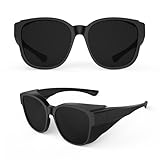
|
Goiteia Cataract Sunglasses for Severe Light... | Check Price |
The American Academy of Ophthalmology advises UV-blocking sunglasses, and the best sunglasses after cataract surgery add full side coverage and a fit-over design for the recovery weeks. Comfort guides how long you wear them.
What Are the Best Sunglasses After Cataract Surgery
The best sunglasses after cataract surgery block 100% UVA/UVB with UV400 lenses, wrap fully with side shields to stop peripheral light, and fit over prescription or post-op glasses. Dark polarized lenses cut glare while a lightweight ventilated frame keeps recovery comfortable. Always follow your surgeon’s specific guidance.
10 Best Sunglasses After Cataract Surgery for Safe Recovery
1. iSafety Cataract Recovery Wrap
iSafety Polarized Cataract Surgery Recovery...
Purpose-built for recovery, the iSafety cataract surgery sunglasses lead the category. Its defining strength is a wraparound fit-over designed specifically for post-operative eyes, with extra-dark polarized UV400 lenses and integrated side shields.
The wraparound fit-over design is worn comfortably over prescription glasses while shielding eyes from bright light, glare, wind, and debris. Extra-dark polarized UV400 lenses block 100% of UVA and UVB to reduce light sensitivity during healing.
iSafety builds in integrated side shields that prevent peripheral light exposure, creating a calm, controlled visual environment for the sensitive recovery period. A lightweight ventilated frame prevents fogging for extended indoor and outdoor wear.
iSafety designs the frame for post-operative protection, with the recovery-specific build as the standout. The purpose-built design is the differentiator.
What most recovering patients get wrong is using the flimsy non-polarized pair from the clinic for weeks, missing that a proper dark polarized wraparound with side shields protects far better. Purpose-built beats the clinic pair.
Best fit: cataract patients wanting a purpose-built recovery wrap for the sensitive healing weeks. For the patient who wants protection designed for the job, the iSafety leads.
| Feature | Spec |
|---|---|
| Frame Style | Fit-over wraparound |
| Lens | Extra-dark polarized |
| Polarization | True polarized |
| UV Protection | UV400, 100% UVA/UVB |
| Side Coverage | Integrated shields |
| Frame | Lightweight, ventilated |
| Fit | Over Rx glasses |
| Best Use Case | Post-cataract recovery |
“After my surgery these were so much better than the cheap pair the clinic gave me, the side shields block all the light my sensitive eyes couldn’t handle, and they fit right over my glasses.“ — Marcus T.
Why We Choose iSafety Cataract Recovery Wrap?
A wraparound fit-over designed specifically for post-operative eyes pairs extra-dark polarized UV400 lenses with integrated side shields that stop peripheral light, far better than the flimsy clinic pair. A ventilated frame prevents fogging. For cataract patients wanting purpose-built recovery protection, it’s the category leader.
2. iSafety Flip-Up Recovery Fit Over
iSafety Cataract Surgery Recovery Flip...
A versatile recovery fit-over, the iSafety LASIK-and-cataract pair brings a flip-up convenience. Its defining strength is a wraparound recovery frame with a flip-up lens feature for adapting to changing light during healing.
The wraparound design minimizes sun exposure from all angles for cataract and LASIK patients, while the flip-up feature lifts the tint over prescription glasses as needed. TAC polarized lenses reduce glare and block UV400.
iSafety builds it with high-impact, anti-scratch lenses for daily recovery wear. The flip-up design suits moving between bright outdoors and dimmer indoors.
iSafety offers the flip-up recovery frame for adaptability, with the lift-up tint as the standout. The flip-up function is the differentiator.
The useful insight is that recovering eyes move between needing heavy tint outdoors and clearer vision indoors, so a flip-up lets you adjust without removing the protective frame, useful when light tolerance shifts. Flip-up handles shifting tolerance.
Best fit: cataract and LASIK patients wanting an adaptable flip-up recovery frame. For the patient whose light tolerance shifts through the day, the iSafety flip-up adapts.
| Feature | Spec |
|---|---|
| Frame Style | Flip-up fit-over |
| Lens | TAC polarized |
| Polarization | True polarized |
| UV Protection | UV400, 100% UVA/UVB |
| Feature | Flip-up tint |
| Coverage | Wraparound |
| Lens Quality | High-impact, anti-scratch |
| Best Use Case | Cataract, LASIK recovery |
“The flip-up lets me lift the dark tint when I go indoors without taking the whole frame off, which is perfect since my light sensitivity changes through the day after surgery — versatile and protective.“ — Hector M.
Why We Choose iSafety Flip-Up Recovery Fit Over?
A flip-up lens lets recovering patients adjust between heavy outdoor tint and clearer indoor vision without removing the protective frame, useful when light tolerance shifts during healing. TAC polarized UV400 lenses and wraparound coverage complete it. For cataract and LASIK patients wanting adaptability, it’s the flip-up recovery pick.
3. Jolooyo Postoperative Safety Glasses
Jolooyo Eye Surgery Cataract Postoperative...
A protective recovery shield, the Jolooyo postoperative glasses bring wound-protecting coverage. Its defining strength is a fully wrapped protective design that guards the surgical wound from wind, sand, and dust while filtering harmful light.
The fully wrapped design protects against wind, sand, and debris that could cause infection of the surgical wound, while polarized, anti-glare lenses filter harmful light including some blue light. UV400 protection blocks harmful rays.
Jolooyo builds it as professional post-operative protective eyewear for cataract and laser surgery recovery, including a box. The protective wrap guards the healing wound.
Jolooyo designs it for wound protection during healing, with the infection-guarding coverage as the standout. The wound protection is the differentiator.
The point worth flagging is that post-surgery protection isn’t just about light, since the wrapped design also shields the healing wound from dust and from accidental rubbing during sleep, which matters for safe healing. Protection guards the wound too.
Best fit: cataract patients wanting wound-protecting coverage during early healing. For the patient focused on protecting the surgical site, the Jolooyo shields it. Follow your surgeon’s guidance on protective eyewear.
| Feature | Spec |
|---|---|
| Frame Style | Wrapped protective |
| Lens | Polarized, anti-glare |
| Polarization | True polarized |
| UV Protection | UV400, 100% UVA/UVB |
| Protection | Wind, dust, debris |
| Light Filtering | Some blue light |
| Extras | Box included |
| Best Use Case | Early post-op protection |
“These wrap fully and protected my eye from dust and wind during the early healing days, and they cut the glare my sensitive eyes couldn’t take — reassuring protection right after surgery.“ — Travis L.
Why We Choose Jolooyo Postoperative Safety Glasses?
A fully wrapped protective design guards the healing surgical wound from wind, dust, and debris while polarized anti-glare lenses filter harmful light, addressing protection beyond just glare. UV400 blocks harmful rays. For cataract patients focused on protecting the surgical site during early healing, it’s the wound-protecting pick, used per surgeon guidance.
4. Bloomoak CAT 4 Side-Protection Wrap
A super-dark recovery wrap, the Bloomoak CAT 4 brings maximum tint for severe sensitivity. Its defining strength is a CAT 4 super-dark polarized wraparound with side protection for severe post-surgery light sensitivity.
The CAT 4 super-dark lenses, around 50% darker than standard, suit severe photophobia and post-surgery recovery, while the wraparound design with extended side coverage blocks glare from all angles. UV400 TAC polarized lenses block harmful rays.
Bloomoak builds it with durable TR90 frames and full top-and-side light coverage. The super-dark tint suits the most light-sensitive recovery.
Bloomoak offers the CAT 4 wrap for severe sensitivity, with the maximum-dark tint as the standout. The CAT 4 darkness is the differentiator.
The useful distinction is that CAT 4 lenses are darker than standard sunglasses, ideal for severe post-surgery light sensitivity, but are too dark for driving, so they suit recovery wear rather than the road. CAT 4 is for sensitivity, not driving.
Best fit: cataract patients with severe light sensitivity wanting maximum-dark recovery lenses. For the patient whom standard sunglasses don’t darken enough, the Bloomoak CAT 4 fits. Not for driving.
| Feature | Spec |
|---|---|
| Frame Style | Wraparound, side coverage |
| Lens Tint | CAT 4 super-dark |
| Polarization | True polarized TAC |
| UV Protection | UV400, 100% UVA/UVB |
| Frame Material | TR90 durable |
| Coverage | Top and side |
| Driving | Not suitable |
| Best Use Case | Severe light sensitivity |
“My eyes were so sensitive after surgery that normal sunglasses weren’t dark enough, but these CAT 4 lenses finally let me be outside comfortably — the side coverage blocks every bit of stray light.“ — Bill D.
Why We Choose Bloomoak CAT 4 Side-Protection Wrap?
CAT 4 super-dark lenses around 50% darker than standard suit severe post-surgery light sensitivity that normal sunglasses can’t handle, with wraparound side coverage blocking glare from all angles. Durable TR90 frames complete it. For cataract patients with severe sensitivity, it’s the maximum-dark recovery pick, though too dark for driving.
5. CAXMAN Side-Shield Fit Over
A full-coverage fit-over, the CAXMAN polarized pair brings side window shields for recovery. Its defining strength is a fit-over with dedicated side window shields that block light from every angle over glasses.
The wraparound fit-over goes over prescription glasses with side window shields that block peripheral glare and light, offering fuller protection than open-sided frames. Polarized lenses cut glare and block 100% UV.
CAXMAN builds it with black frames and grey lenses for versatile recovery and everyday use. The side-shield design suits sensitive eyes.
CAXMAN offers the side-shield fit-over for full coverage, with the side windows as the standout. The maximum side protection is the differentiator.
The point worth noting is that side window shields matter most for recovering eyes, since light leaking in from the sides bothers sensitive post-surgery eyes, and shielded sides block it fully where open-sided frames don’t. Side shields seal the light out.
Best fit: cataract patients wanting full side coverage over their glasses during recovery. For the patient bothered by side light over their Rx, the CAXMAN shields it.
| Feature | Spec |
|---|---|
| Frame Style | Fit-over, side shields |
| Polarization | True polarized |
| UV Protection | 100% UVA/UVB |
| Coverage | Side window shields |
| Lens | Grey |
| Fit | Over Rx glasses |
| Use | Recovery, everyday |
| Best Use Case | Full coverage over-glasses |
“The side window shields block the light coming in from the sides that my eyes couldn’t tolerate after surgery, and they fit over my glasses — full protection that open-sided pairs couldn’t give me.“ — Sofia G.
Why We Choose CAXMAN Side-Shield Fit Over?
Dedicated side window shields block the peripheral light that bothers sensitive post-surgery eyes, which open-sided frames let leak in, while fitting over prescription glasses. Polarized lenses cut glare and block UV. For cataract patients wanting full side coverage during recovery, it’s the maximum-protection fit-over.
6. MEETSUN Fit Over Wraparound
MEETSUN Fit Over Glasses Sunglasses for Men...
A comfortable everyday fit-over, the MEETSUN pair suits the later recovery weeks. Its defining strength is a comfortable wraparound fit-over that slips over glasses while blocking side glare, ideal as sensitivity eases.
The wraparound fit-over goes over regular glasses and blocks side glare, suiting recovery once severe sensitivity passes and a standard dark tint suffices. Polarized lenses cut glare while blocking UVA and UVB.
MEETSUN builds it with UV400 protection and a comfortable wrap in multiple lens options. The everyday fit-over suits the transition back to normal wear.
MEETSUN offers the fit-over as a comfortable transition pick, with the everyday comfort as the standout. The transition-wear comfort is the differentiator.
The useful insight is that recovery is a taper, and as light sensitivity eases over weeks 2 to 4, many patients move from CAT 4 super-dark lenses to a standard comfortable fit-over for ongoing UV protection. Recovery tapers toward normal wear.
Best fit: cataract patients in later recovery wanting a comfortable everyday fit-over. For the patient whose sensitivity has eased, the MEETSUN transitions back.
| Feature | Spec |
|---|---|
| Frame Style | Fit-over wraparound |
| Polarization | True polarized |
| UV Protection | UV400, 100% UVA/UVB |
| Coverage | Side glare |
| Fit | Over Rx glasses |
| Lens Options | Multiple |
| Comfort | Lightweight |
| Best Use Case | Later recovery, everyday |
“As my eyes recovered I switched from the super-dark pair to these for everyday, they fit over my glasses comfortably and still block the glare and UV — perfect for the transition back to normal.“ — Reyansh P.
Why We Choose MEETSUN Fit Over Wraparound?
A comfortable wraparound fit-over suits the recovery taper, when light sensitivity eases over weeks 2 to 4 and patients move from super-dark CAT 4 lenses to a standard dark tint for ongoing UV protection. Polarized UV400 lenses cut glare. For cataract patients in later recovery, it’s the transition-comfort pick.
7. Goiteia Cataract Fit Over CAT 4
Goiteia Cataract Sunglasses for Severe Light...
An extra-large recovery fit-over, the Goiteia cataract pair brings wide super-dark coverage. Its defining strength is an extra-large CAT 4 super-dark fit-over sized to cover glasses fully for post-surgery sensitivity.
The extra-large wide wraparound fit-over goes over prescription glasses with CAT 4 super-dark polarized lenses for severe light sensitivity. UV400 protection blocks harmful rays and full coverage soothes sore eyes.
Goiteia builds it for post-laser and cataract surgery recovery with generous sizing. The extra-large fit suits larger glasses and fuller coverage.
Goiteia offers the extra-large CAT 4 fit-over for recovery, with the wide super-dark coverage as the standout. The extra-large dark coverage is the differentiator.
The point worth flagging is that an extra-large fit-over matters during recovery because it covers larger post-op glasses and provides fuller coverage, while the CAT 4 tint handles the heightened sensitivity. Larger coverage soothes sensitive eyes.
Best fit: cataract patients with larger glasses wanting wide super-dark recovery coverage. For the patient needing both darkness and generous fit, the Goiteia covers it. Not for driving.
| Feature | Spec |
|---|---|
| Frame Style | Extra-large fit-over |
| Lens Tint | CAT 4 super-dark |
| Polarization | True polarized |
| UV Protection | UV400, 100% UVA/UVB |
| Size | Extra-large wide |
| Fit | Over Rx glasses |
| Driving | Not suitable |
| Best Use Case | Severe sensitivity, large fit |
“These extra-large fit-overs cover my big glasses completely and the super-dark lenses finally made my sore post-surgery eyes comfortable outside — wide coverage and serious darkness when I needed it most.“ — Nina P.
Why We Choose Goiteia Cataract Fit Over CAT 4?
An extra-large CAT 4 super-dark fit-over covers larger post-op glasses fully while handling the heightened sensitivity of recovery, since larger coverage soothes sensitive eyes. Polarized UV400 lenses block harmful rays. For cataract patients with larger glasses needing darkness and generous fit, it’s the wide super-dark pick, not for driving.
8. DEAFRAIN CAT 4 Sensitive-Eyes Wrap

DEAFRAIN Super Dark Lens Polarized Sunglasses...
A sport-style dark wrap, the DEAFRAIN CAT 4 brings super-dark coverage in a normal-looking frame. Its defining strength is a CAT 4 super-dark polarized wraparound styled like regular sport sunglasses rather than clinical eyewear.
The wraparound sport frame provides side coverage while CAT 4 super-dark lenses handle severe sensitivity, in a style that looks like normal sunglasses. UV400 polarized lenses block harmful rays.
DEAFRAIN builds it for sensitive eyes and photophobia in a wearable sport design. The normal styling suits patients who want protection without the medical look.
DEAFRAIN offers the CAT 4 wrap in sport styling, with the normal-looking dark protection as the standout. The wearable styling is the differentiator.
The useful distinction is that not every recovering patient wears glasses underneath, so a standalone CAT 4 sport wrap suits those without prescription glasses who want darkness and side coverage in a normal frame. Standalone wraps suit non-glasses wearers.
Best fit: cataract patients without glasses wanting super-dark protection in a normal-looking frame. For the patient who wants darkness without the clinical look, the DEAFRAIN fits. Not for driving.
| Feature | Spec |
|---|---|
| Frame Style | Sport wraparound |
| Lens Tint | CAT 4 super-dark |
| Polarization | True polarized |
| UV Protection | UV400, 100% UVA/UVB |
| Coverage | Side |
| Styling | Normal sport look |
| Driving | Not suitable |
| Best Use Case | Sensitivity, no glasses |
“These look like normal sport sunglasses instead of medical goggles, but the CAT 4 lenses are dark enough for my sensitive eyes after surgery — protection I’m not embarrassed to wear out.“ — Omar F.
Why We Choose DEAFRAIN CAT 4 Sensitive-Eyes Wrap?
A CAT 4 super-dark polarized wraparound in normal sport styling suits recovering patients without prescription glasses who want darkness and side coverage without the clinical look. UV400 lenses block harmful rays. For cataract patients who want wearable super-dark protection, it’s the normal-looking pick, not for driving.
9. DEAFRAIN Fit Over Recovery Wrap

DEAFRAIN Super Dark Lens Polarized Fit Over...
A standalone-or-fit-over wrap, the DEAFRAIN fit-over brings flexible recovery coverage. Its defining strength is a dark polarized fit-over that works over glasses or alone, with full side coverage for recovery.
The fit-over wraparound goes over prescription glasses or works alone, with dark polarized lenses and side coverage blocking light from all angles. UV400 protection blocks harmful rays during healing.
DEAFRAIN builds it for sensitive eyes with a comfortable flexible frame. The dual fit-over-or-standalone use suits varied recovery needs.
DEAFRAIN offers the fit-over for flexible recovery wear, with the dual-use design as the standout. The over-or-alone flexibility is the differentiator.
The point worth noting is that recovery needs change, and a frame that works both over glasses and alone covers the whole recovery, from early days wearing it over post-op glasses to later wearing it standalone. One frame covers the full recovery.
Best fit: cataract patients wanting one frame that works over glasses and alone through recovery. For the patient whose needs change, the DEAFRAIN flexes.
| Feature | Spec |
|---|---|
| Frame Style | Fit-over wraparound |
| Lens | Dark polarized |
| Polarization | True polarized |
| UV Protection | UV400, 100% UVA/UVB |
| Coverage | Full side |
| Use | Over glasses or alone |
| Frame | Flexible |
| Best Use Case | Flexible recovery |
“I wear these over my glasses some days and alone on others, the dark lenses and side coverage protect my healing eyes either way — one flexible pair that handled my whole recovery.“ — Priya S.
Why We Choose DEAFRAIN Fit Over Recovery Wrap?
A dark polarized fit-over that works over glasses or alone covers the whole recovery, from early days over post-op glasses to later standalone wear, with full side coverage blocking light from all angles. UV400 protection completes it. For cataract patients whose needs change, it’s the flexible-use recovery pick.
10. ShadyVEU Round Side-Shield Recovery

ShadyVEU Super Dark Round Sunglasses UV...
A vintage-style protective frame, the ShadyVEU round brings dark coverage with optional side shields. Its defining strength is a round frame with side shields and dark lenses suiting sensitive recovering eyes in a retro style.
The round frame with side shields blocks peripheral light for sensitive eyes, with dark lenses handling glare during recovery. UV protection blocks harmful rays in a vintage-inspired design.
ShadyVEU builds it with a spring hinge and a retro style that suits patients wanting a distinctive look. The side-shield round frame suits recovery and ongoing sensitivity.
ShadyVEU offers the round side-shield frame for style-conscious recovery, with the retro protective look as the standout. The vintage styling is the differentiator.
The useful insight is that side shields come on more than just sport wraps, and a vintage round frame with shields gives recovering patients protection in a style that doesn’t look medical at all. Style and protection can coexist.
Best fit: cataract patients wanting protective dark coverage in a distinctive retro style. For the patient who wants side shields without the sport look, the ShadyVEU fits.
| Feature | Spec |
|---|---|
| Frame Style | Round, side shields |
| Lens | Dark |
| UV Protection | 100% UVA/UVB |
| Coverage | Side shields |
| Hinge | Spring |
| Styling | Vintage retro |
| Use | Recovery, sensitivity |
| Best Use Case | Stylish protective recovery |
“These round frames with side shields look vintage and stylish, not medical, but they still block the side light my sensitive eyes needed after surgery — protection with personality.“ — Lena K.
Why We Choose ShadyVEU Round Side-Shield Recovery?
A round frame with side shields gives recovering patients peripheral light protection in a vintage style that doesn’t look medical, proving style and protection can coexist. Dark lenses and UV protection complete it. For cataract patients wanting protective coverage in a distinctive retro look, it’s the stylish-protection pick.
11. BIRCEN Ultra-Light Fit Over

BIRCEN Polarized Fit Over Sunglasses: Wear...
A featherweight recovery fit-over, the BIRCEN polarized pair brings minimal-weight comfort. Its defining strength is an ultra-light 21.5-gram fit-over that sits comfortably over post-op glasses during long recovery wear.
The wraparound fit-over goes over glasses with TAC polarized lenses, at just 21.5 grams to avoid pressure during extended recovery wear. UV protection blocks 100% of harmful rays.
BIRCEN builds it in a flexible TR90 frame that bends without damage, sized to cover most glasses. The ultra-light build suits all-day recovery comfort.
BIRCEN designs it for minimal weight, with the featherweight comfort as the standout. The 21.5-gram weight is the differentiator.
The point worth flagging is that comfort matters during recovery because you wear sunglasses for long stretches, so an ultra-light fit-over avoids the pressure and irritation a heavy frame causes sensitive healing eyes. Light weight aids recovery comfort.
Best fit: cataract patients wanting the lightest, most comfortable fit-over for long wear. For the patient bothered by frame pressure, the BIRCEN’s 21.5 grams disappears.
| Feature | Spec |
|---|---|
| Frame Style | Fit-over wraparound |
| Lens | TAC polarized |
| Polarization | True polarized |
| UV Protection | 100% UVA/UVB |
| Weight | 21.5 g |
| Frame Material | TR90 flexible |
| Fit | Over Rx glasses |
| Best Use Case | Comfortable long wear |
“These weigh almost nothing so I can wear them for hours over my glasses without any pressure on my recovering eyes — the comfort makes a real difference when you’re wearing them all day.“ — Wes A.
Why We Choose BIRCEN Ultra-Light Fit Over?
An ultra-light 21.5-gram fit-over avoids the pressure and irritation a heavy frame causes sensitive healing eyes during the long stretches of recovery wear. TAC polarized lenses and a flexible TR90 frame complete it. For cataract patients who want comfortable long-wear protection, it’s the featherweight recovery pick.
12. DUCO Fit Over Wraparound 8953

DUCO Polarized Wraparound Fitover Glasses...
Closing the lineup, the DUCO 8953 brings a ventilated fit-over for fog-free recovery. Its defining strength is a wraparound fit-over with side lenses and a top vent that prevents the fogging recovery patients face indoors and out.
The wraparound fit-over goes over prescription glasses with side lenses for peripheral coverage, while a top ventilation window prevents fogging. Polarized UV400 lenses cut glare in a flexible TR90 frame.
DUCO builds the 8953 for myopic wearers, including a case and cloth. The vented fit-over suits recovery wear in varied conditions.
DUCO offers the 8953 as a ventilated fit-over, with the anti-fog side coverage as the standout that closes the list. The ventilation is the differentiator.
The useful insight that wraps the lineup is that recovering patients often wear sunglasses indoors and out where temperature changes cause fogging, so a vented fit-over keeps vision clear where a closed one fogs. Ventilation keeps recovery vision clear.
Best fit: cataract patients wanting a vented, fog-resistant fit-over for indoor-outdoor recovery. For the patient whose fit-overs fog, the DUCO 8953 breathes and closes the list.
| Feature | Spec |
|---|---|
| Frame Style | Fit-over wraparound |
| Polarization | True polarized |
| UV Protection | UV400, 100% UVA/UVB |
| Frame Material | TR90 flexible |
| Coverage | Side lenses |
| Feature | Top vent, anti-fog |
| Extras | Case, cloth |
| Best Use Case | Fog-free recovery |
“Moving between my warm house and outside kept fogging my old fit-overs, but the top vent on these keeps them clear, the side lenses block peripheral light, and they fit right over my glasses — practical for recovery.“ — Dana R.
Why We Choose DUCO Fit Over Wraparound 8953?
A wraparound fit-over with side lenses and a top ventilation window prevents the fogging recovering patients face moving between indoor and outdoor temperatures, while blocking peripheral light. Polarized UV400 lenses and a flexible TR90 frame complete it. For cataract patients wanting fog-free recovery wear, it’s the ventilated closer.
Comparison Table
| Product | Frame Type | Lens / Tint | Best Use Case |
|---|---|---|---|
| iSafety Recovery | Fit-over, side shields | Extra-dark polarized | Purpose-built recovery |
| iSafety Flip-Up | Flip-up fit-over | TAC polarized | Adaptable recovery |
| Jolooyo | Wrapped protective | Polarized anti-glare | Early wound protection |
| Bloomoak CAT 4 | Wrap, side coverage | CAT 4 super-dark | Severe sensitivity |
| CAXMAN | Fit-over, side shields | Polarized grey | Full coverage over-glasses |
| MEETSUN | Fit-over wrap | Polarized | Later recovery, everyday |
| Goiteia CAT 4 | XL fit-over | CAT 4 super-dark | Severe sensitivity, large fit |
| DEAFRAIN sport | Sport wrap | CAT 4 super-dark | Sensitivity, no glasses |
| DEAFRAIN fit-over | Fit-over wrap | Dark polarized | Flexible recovery |
| ShadyVEU | Round, side shields | Dark | Stylish protective |
| BIRCEN | Fit-over wrap | TAC polarized, 21.5g | Comfortable long wear |
| DUCO 8953 | Fit-over, vented | Polarized | Fog-free recovery |
How to Choose Sunglasses After Cataract Surgery
The right post-surgery pick comes down to full UV protection, complete coverage including the sides, a comfortable fit over any post-op glasses, and tint matched to your sensitivity level, always guided by your surgeon’s advice. Get these right and your healing eyes stay protected and comfortable.
UV protection is the non-negotiable foundation, and the American Academy of Ophthalmology recommends sunglasses that block 100% of UVA and UVB radiation, meaning UV400 lenses. After cataract surgery, and for lifelong eye health afterward, full UV blocking protects your eyes, so this is the first feature to confirm on any pair regardless of style or tint.
Complete coverage including the sides matters more after surgery than at any other time. Recovering eyes are sensitive to light from all angles, so wraparound frames and designs with side shields or side lenses block the peripheral light that bothers healing eyes, where open-sided frames let it leak in. Johns Hopkins notes that eyes can stay environment-sensitive for at least a week, and wraparound sunglasses help protect against light, wind, and dust during this period.
Fit over post-op or prescription glasses is a key practical consideration. Many patients wear glasses during recovery, so a fit-over design that goes over existing eyewear provides protection without needing prescription sunglasses. Look for a fit-over sized to cover your glasses, with oversized or extra-large options for larger frames, and prioritize a lightweight frame since you’ll wear it for long stretches.
Tint and darkness should match your sensitivity level, which changes through recovery. In the first week, when sensitivity is highest, dark lenses including CAT 4 super-dark options suit severe light sensitivity and photophobia. As sensitivity eases over weeks 2 to 4, many patients taper to a standard dark tint for comfort. Comfort, not a fixed timeline, should guide how dark a lens you need, since healing varies by individual.
Polarization helps reduce glare, though the AAO considers it optional. Polarized lenses cut reflected glare off surfaces, adding comfort for sensitive recovering eyes, so most recovery-specific frames include it. Confirm genuine polarization with the LCD-screen rotation test on arrival.
Comfort features matter for the long wear recovery involves. Lightweight TR90 frames, some as light as 21.5 grams, avoid pressure on sensitive eyes, while ventilation prevents the fogging that happens moving between indoor and outdoor temperatures. A comfortable frame is one you’ll actually keep wearing through healing.
A critical safety note: CAT 4 super-dark lenses, while ideal for severe recovery sensitivity, are too dark for driving and not legal or safe for it. Use super-dark lenses for recovery wear and a standard dark tint for any driving once your surgeon clears you to drive. Above all, follow your eye surgeon’s specific guidance on when and how to protect your eyes during recovery, as they know your individual healing. Match the UV protection, coverage, fit, and tint to your needs and your surgeon’s advice, and your eyes stay protected through healing and beyond.
What Most Guides Get Wrong
Most guides treat post-cataract sunglasses like ordinary sunglasses, missing that recovering eyes have specific needs ordinary shades don’t meet. The truth they skip: after surgery, eyes are sensitive to light from all angles, so side coverage matters as much as the front lens, and a regular open-sided pair lets peripheral light bother healing eyes where a wraparound with side shields blocks it. The AAO recommends 100% UVA/UVB protection, and Johns Hopkins notes wraparound sunglasses specifically help protect against light, wind, and dust during the sensitive first week. Recommending a stylish open-sided pair, the way you would for everyday wear, misses what recovering eyes actually need: full coverage, not just a dark front lens.
The second thing guides get wrong is ignoring that recovery is a taper, not a fixed state, and that tint needs change as healing progresses. The reality is that light sensitivity is highest in the first week, when CAT 4 super-dark lenses genuinely help, then eases over weeks 2 to 4 as many patients move to a standard dark tint, with comfort rather than the calendar guiding the change. A guide that recommends one darkness level for the whole recovery misses this. Equally overlooked is the safety point that CAT 4 super-dark lenses are too dark for driving, so patients need recovery lenses for healing and a standard tint for the road once cleared to drive. The most important thing any guide should say, and many don’t, is to follow your eye surgeon’s specific guidance, since individual healing varies and your surgeon knows your eyes best.
Frequently Asked Questions
What Kind of Sunglasses Should I Wear After Cataract Surgery
After cataract surgery, you should wear sunglasses that block 100% of UVA and UVB rays, provide full coverage including the sides, and have a tint dark enough for your sensitivity level. The American Academy of Ophthalmology recommends UV400 sunglasses that block all UVA and UVB radiation, which protects your healing eyes and supports lifelong eye health. Wraparound frames or designs with side shields are particularly recommended, since recovering eyes are sensitive to light from all angles.
Fit-over designs that go over prescription glasses are practical if you wear glasses during recovery.
For tint, the first week typically calls for dark lenses, with CAT 4 super-dark options suiting severe light sensitivity, then many patients taper to a standard dark tint as sensitivity eases over weeks 2 to 4. Polarized lenses reduce glare for added comfort, though the AAO considers polarization optional. Look for lightweight, ventilated frames for comfortable extended wear. Johns Hopkins notes that eyes can remain environment-sensitive for at least a week, and wraparound sunglasses help protect against light, wind, and dust. Most importantly, follow your eye surgeon’s specific guidance on eye protection during recovery, as individual healing varies and your surgeon knows your particular needs best.
How Long Do You Need to Wear Sunglasses After Cataract Surgery
You need to wear sunglasses outdoors during the first week after cataract surgery for both comfort and protection, then continue in weeks 2 to 4 as needed based on your sensitivity, with comfort rather than a strict timeline guiding the duration. During the first week, the guidance is to always wear sunglasses outdoors, since this is when light sensitivity is highest and the eyes are healing.
Beyond the first week, sensitivity typically eases gradually.
In weeks 2 to 4, the common guidance is to wear sunglasses outdoors whenever you feel sensitive, with many people tapering off as brightness becomes comfortable again. Dilating drops used during surgery usually wear off within hours to a day, but some people experience photophobia longer, so comfort should guide your choices rather than a fixed clock. After about week 4, the recommendation shifts to wearing UV-blocking sunglasses routinely for lifelong eye protection, which is good practice whether you’ve had surgery or not. Individual healing varies significantly, so the timeline is a general guide rather than a rule. Always follow your eye surgeon’s specific post-operative instructions, as they will confirm protection guidance based on your individual recovery at follow-up visits.
Do Sunglasses After Cataract Surgery Need to Be Polarized
Sunglasses after cataract surgery do not strictly need to be polarized, but polarization adds comfort by reducing glare, which is why most recovery-specific sunglasses include it. The American Academy of Ophthalmology’s core recommendation is sunglasses that block 100% of UVA and UVB rays, meaning UV400, with polarization listed as optional for reducing glare. So UV protection is the essential feature, while polarization is a helpful addition rather than a requirement.
That said, polarized lenses genuinely help during recovery.
Polarized lenses cut the reflected glare off surfaces like roads, water, and bright pavement, which can bother sensitive healing eyes, so many patients find polarization adds real comfort during recovery. Most purpose-built post-surgery sunglasses, like the iSafety and Bloomoak recovery frames, use polarized lenses for this reason. The priority order is clear: first ensure 100% UVA/UVB protection, then full coverage including the sides, then a tint matched to your sensitivity, with polarization as a comfortable bonus. If choosing between a polarized pair and a non-polarized pair that both block 100% UV, the polarized option offers more glare comfort. For recovering eyes, polarized UV400 lenses with full coverage represent an excellent choice, though the UV blocking matters most.
Can You Wear Fit Over Sunglasses After Cataract Surgery
Yes, fit-over sunglasses are an excellent and popular choice after cataract surgery, since they provide full coverage protection over any glasses you wear during recovery, and many are designed specifically for post-surgery use. Fit-overs go over your prescription or post-op glasses, blocking light from the front and sides, which suits recovering eyes that are sensitive to peripheral light. Several brands, including iSafety and Goiteia, make fit-overs specifically marketed for cataract surgery recovery.
The fit-over design offers practical advantages during recovery.
For post-surgery use, look for fit-overs with polarized UV400 lenses, side shields or side coverage to block peripheral light, and a comfortable lightweight frame for the extended wear recovery involves. Some include ventilation to prevent fogging, useful when moving between indoor and outdoor temperatures. Extra-large or oversized fit-overs accommodate larger glasses, while the tint should match your sensitivity, with CAT 4 super-dark options for the most sensitive early days. Fit-overs work whether or not you wear glasses, making them versatile through recovery. They cost far less than prescription sunglasses and provide the full coverage sensitive healing eyes need. As always, follow your eye surgeon’s specific recommendations for post-operative protection, as they may advise particular lens darkness or coverage based on your individual healing.
Why Are My Eyes So Sensitive to Light After Cataract Surgery
Your eyes are sensitive to light after cataract surgery because the procedure removes the cloudy lens that previously filtered some light, and the dilating drops used during surgery temporarily widen your pupils, both of which let more light reach the retina. This combination makes bright light feel uncomfortable or even painful during the initial recovery period, a normal and expected part of healing.
The sensitivity is temporary for most patients.
Dilating drops typically wear off within hours to a day, reducing some of the sensitivity, but the eyes can remain environment-sensitive for at least a week as they heal, per Johns Hopkins. Some people experience photophobia longer than others, since individual healing varies. The new clear lens also lets through more light, including blue light, than the old cloudy one did, which can contribute to the brightness feeling more intense initially as your eyes adjust. This is why dark, full-coverage sunglasses are recommended during recovery, blocking the excess light while your eyes heal and adjust. The sensitivity generally eases over the following weeks as healing progresses. If you experience severe, worsening, or persistent light sensitivity, or any concerning symptoms, contact your eye surgeon, as they can assess whether your recovery is progressing normally.
Are CAT 4 Sunglasses Good After Cataract Surgery
CAT 4 sunglasses can be good after cataract surgery for severe light sensitivity, since their super-dark lenses block significantly more light than standard sunglasses, but they are too dark for driving and best suited to the most sensitive recovery periods. CAT 4 is the darkest sunglasses category, transmitting very little light, which genuinely helps patients with severe photophobia in the early recovery days when eyes are most sensitive to brightness.
This makes them valuable for the most light-sensitive phase of recovery.
However, CAT 4 lenses come with an important limitation: they are too dark for driving and are not legal or safe to drive in, since they reduce visibility too much and can make traffic signals harder to distinguish. So they suit recovery wear, indoor and outdoor use when not driving, rather than the road. Brands like Bloomoak and Goiteia make CAT 4 recovery sunglasses with side coverage specifically for post-surgery sensitivity. As sensitivity eases over the recovery weeks, many patients move from CAT 4 to a standard dark tint that is suitable for driving once cleared. The practical approach is using CAT 4 for severe early sensitivity and a standard tint for driving and later recovery. Always follow your eye surgeon’s guidance on appropriate lens darkness for your healing.
Can I Wear My Old Sunglasses After Cataract Surgery
You can wear your old sunglasses after cataract surgery if they block 100% of UVA and UVB rays and provide adequate coverage, but many standard sunglasses lack the full side coverage and darkness that sensitive recovering eyes benefit from. The key requirement is genuine UV400 protection, so if your old sunglasses block 100% UVA/UVB, they meet the essential criterion. However, recovering eyes have needs that ordinary sunglasses may not fully address.
The main gaps in standard sunglasses are side coverage and tint level.
After surgery, eyes are sensitive to light from all angles, so open-sided frames let peripheral light leak in where wraparound or side-shielded frames block it, making purpose-built recovery sunglasses or wraparound styles more comfortable. Your old sunglasses may also not be dark enough for the heightened early sensitivity, where CAT 4 super-dark lenses help. If your existing sunglasses are wraparound style with full UV protection and feel comfortable, they may work fine, especially as you move past the most sensitive early days. But for the first week and for severe sensitivity, a dedicated recovery pair with side coverage and appropriate darkness often serves better. Check that any sunglasses you use block 100% UV, and follow your surgeon’s guidance on coverage and darkness for your recovery.
What Should I Look for in Sunglasses for Light Sensitivity After Surgery
For light sensitivity after surgery, look for sunglasses that block 100% UVA/UVB, provide full coverage with side protection, offer a dark enough tint for your sensitivity, and fit comfortably for extended wear. The foundation is UV400 protection blocking all UVA and UVB, as the AAO recommends, which is essential regardless of other features. Beyond that, the features that specifically help light sensitivity are coverage and tint.
Full coverage including the sides is crucial for sensitive eyes.
Wraparound frames, side shields, or side lenses block the peripheral light that bothers sensitive eyes from all angles, where open-sided frames let it in. For tint, darker lenses help more sensitive eyes, with CAT 4 super-dark options for severe photophobia, tapering to standard dark as sensitivity eases. Polarized lenses add glare-reducing comfort. Practical comfort features matter too: lightweight frames, some as light as 21.5 grams, avoid pressure during long wear, and ventilation prevents fogging indoors and out. Fit-over designs work over glasses. Some patients also benefit from FL-41 tinted lenses for migraine-associated light sensitivity, though dark UV400 lenses suit most post-surgery needs. Prioritize UV protection and full coverage first, then match the darkness to your comfort, and follow your surgeon’s specific guidance on protection for your individual recovery and light sensitivity.
Conclusion
Picture the difference between stepping outside in a flimsy clinic-issued pair versus a proper wraparound that blocks light from every angle: for healing eyes, that gap is the difference between wincing and comfort. The American Academy of Ophthalmology is clear that 100% UVA/UVB protection comes first, with full coverage and a tint matched to your sensitivity close behind.
For the best sunglasses after cataract surgery, the purpose-built iSafety recovery wrap leads, CAT 4 frames from Bloomoak and Goiteia handle severe early sensitivity, and lighter fit-overs ease the transition back. Above all, follow your eye surgeon’s guidance, since they know your healing best.
This is a sensitive topic touching on your recovery and eye health. If you have concerns about your healing, light sensitivity, or which protection is right for you, your eye surgeon or care team is the best source of personalized guidance.